
Human-Centered AI as a Mindset – The HAI² Model as a Methodology
HAI² Consulting supports your business in deploying AI meaningfully and strategically.
Human-Centered AI
Human-Centered AI means that artificial intelligence is consistently aligned with people—not the other way around.
AI systems should enhance people’s capabilities, meet their needs, and be transparent, fair, and trustworthy. The focus is not on algorithms, but on the people who work with AI, are affected by it, or bear responsibility for it.
Human-Centered AI combines technical excellence with ethical reflection and organizational change
Read my LinkedIn post on this topic:
“Despite its name, there is nothing artificial about this technology - it is made by humans, intended to behave like humans and affects humans.”
— Fei-Fei Li, How to Make A.I. That’s Good for People, The New York Times, March 7, 2018
The HAI² Model
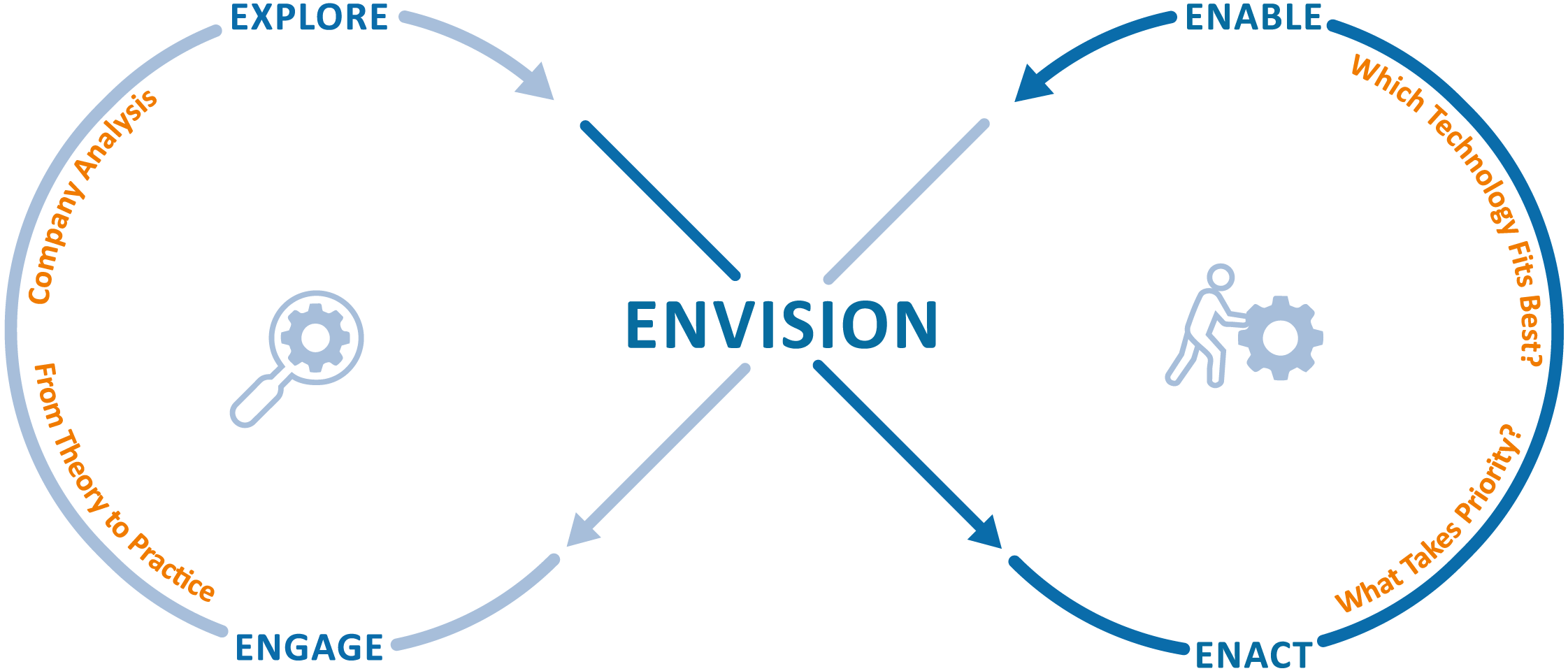
Many AI initiatives fail not because of the technology, but because of unclear goals. The HAI² model combines Human-Centered AI, Design Thinking, and systemic organizational development across five consecutive phases.

01. Explore – Understanding the Status Quo
Analysis of current AI usage, processes, and the IT landscape through interviews and reviews.
- Stakeholder interviews with management, departments, and IT
- Analysis of existing data, tools, and processes
- Assessment of organizational AI maturity
- Identification of quick wins and strategic fields of action
→ Transparency regarding maturity level and potential.

02. Envision – Developing Shared Visions
Facilitated workshops for management, business units, and IT to develop visions and roadmaps.
- Design Thinking workshops with cross-functional teams
- Development of a shared AI vision
- Derivation of strategic goals and guardrails
- Creation of a prioritized roadmap
→ Shared vision and clear prioritization.

03. Enact – Enabling Well-Founded Decisions
Consolidation of all insights incl. SWOT, use cases, and ROI analyses.
- SWOT analysis of AI potential
- Detailed use case descriptions
- ROI and feasibility analyses
- Management-ready decision templates
→ A basis for decision-making instead of blind activism.

04. Enable – Supporting Implementation
Definition and prioritization of use cases, rapid prototyping, feasibility analyses.
- Rapid prototyping of selected use cases
- Technical feasibility analyses
- Vendor evaluation and tool selection
- Support for pilot implementation
→ Validated use cases and realistic implementation options.
05. Engage – Ensuring Acceptance and Impact
Organizational learning, change management, and sustainable implementation.
- Change management strategy and communication plan
- Training and enablement programs
- Building internal AI expertise
- Sustainable anchoring in processes and culture
→ Anchoring in workflows and culture.